Cellular messengers
Exosomes are tiny cell-released vesicles that carry growth factors, peptides and other signaling material. They are not stem cells.

- STARTING OCTOBER 1ST -
WE MOVED TO:
125 Co-Op Rd, Myrtle Beach, SC 29588
PHONE: (843) 796 1769
STARTING OCTOBER 1ST - VISIT US AT OUR NEW LOCATION - 125 Co-Op Rd, Myrtle Beach, SC 29588
Hair thinning rarely announces itself. Most people notice it in stages. A few more strands in the shower drain. A part line that looks wider in photos than it does in the mirror. A ponytail that feels thinner than it did two years ago. By the time the change is obvious, it has usually been underway for a while.
At Coastal Aesthetics & Wellness in Carolina Forest, exosome therapy is one of the newer options clients ask us about most, and also one of the most misunderstood. Here is a clear look at what exosomes are, what the current research actually supports, and how we approach hair thinning for clients across Myrtle Beach, Conway and the Grand Strand.
Myrtle Beach hair restoration guide
Exosomes for hair loss may support healthier follicle signaling, but they are not a guaranteed regrowth treatment. The best plan starts by identifying the type and stage of thinning.
Exosomes are tiny cell-released vesicles that carry growth factors, peptides and other signaling material. They are not stem cells.
Early to moderate or diffuse thinning may be more suitable than long-established areas where follicles are no longer active.
Hair growth is slow. Progress is commonly evaluated with consistent photographs at approximately three, six and twelve months.
Sudden, patchy or irritated hair loss may need medical evaluation. A consultation helps determine whether aesthetic treatment is appropriate.

Losing hair every day is normal. The American Academy of Dermatology outlines the difference between everyday shedding and true hair loss, and that distinction matters, because the two call for different responses. Shedding that follows a stressful stretch, an illness or a pregnancy often settles on its own. Progressive thinning at the part line or crown usually does not.
If your thinning came on suddenly, shows up in patches, or comes with scalp irritation, start with a physician or dermatologist. Some causes are medical, including thyroid function, iron levels, medication changes and autoimmune conditions. Aesthetic treatment works best alongside that picture rather than in place of it.
Exosomes are not stem cells and they are not a drug. They are extremely small vesicles that cells release in order to communicate with other cells, carrying growth factors, peptides and other signaling material along with them. The simplest way to think about them is as messengers.
The idea behind exosome treatment for hair is direct: if follicles have gone quiet, delivering concentrated signaling material to the scalp may help encourage more active growth behavior. Research on how exosomes influence the hair follicle growth cycle centers on exactly that signaling role.
This is where honesty serves you better than enthusiasm. A 2025 systematic review of clinical evidence on exosomes and hair regeneration found that every study included reported improvement in at least one hair measure, with several documenting gains in hair density and strand thickness over follow-up periods ranging from roughly twelve weeks to twelve months. Reported side effects across those studies were mild.
Those are encouraging signals. They also come with real caveats worth knowing before you spend money:
We would rather say that plainly than oversell it. Exosome therapy is a promising and actively studied option, not a guaranteed outcome. Individual results vary with the type and stage of thinning, and nobody can responsibly promise you a specific amount of regrowth.
In our experience, the clients who get the most out of exosome therapy tend to share a few characteristics:
The logic is simple. Follicles that are still present but underperforming have something left to respond with. Areas where the follicles are gone do not.
A Practical Fit Check
This guide can help you prepare for a consultation, but it does not replace a medical evaluation or personalized scalp assessment.
Not sure where your thinning fits? A free consultation can help clarify the next step without committing you to treatment.
Schedule a free consultationEvery exosome plan here starts with a free consultation. We look at your scalp, talk through your history and your timeline, ask what you have already tried, and give you a straight answer about whether we think exosomes are a reasonable fit. If they are not, we will tell you that instead of booking you.
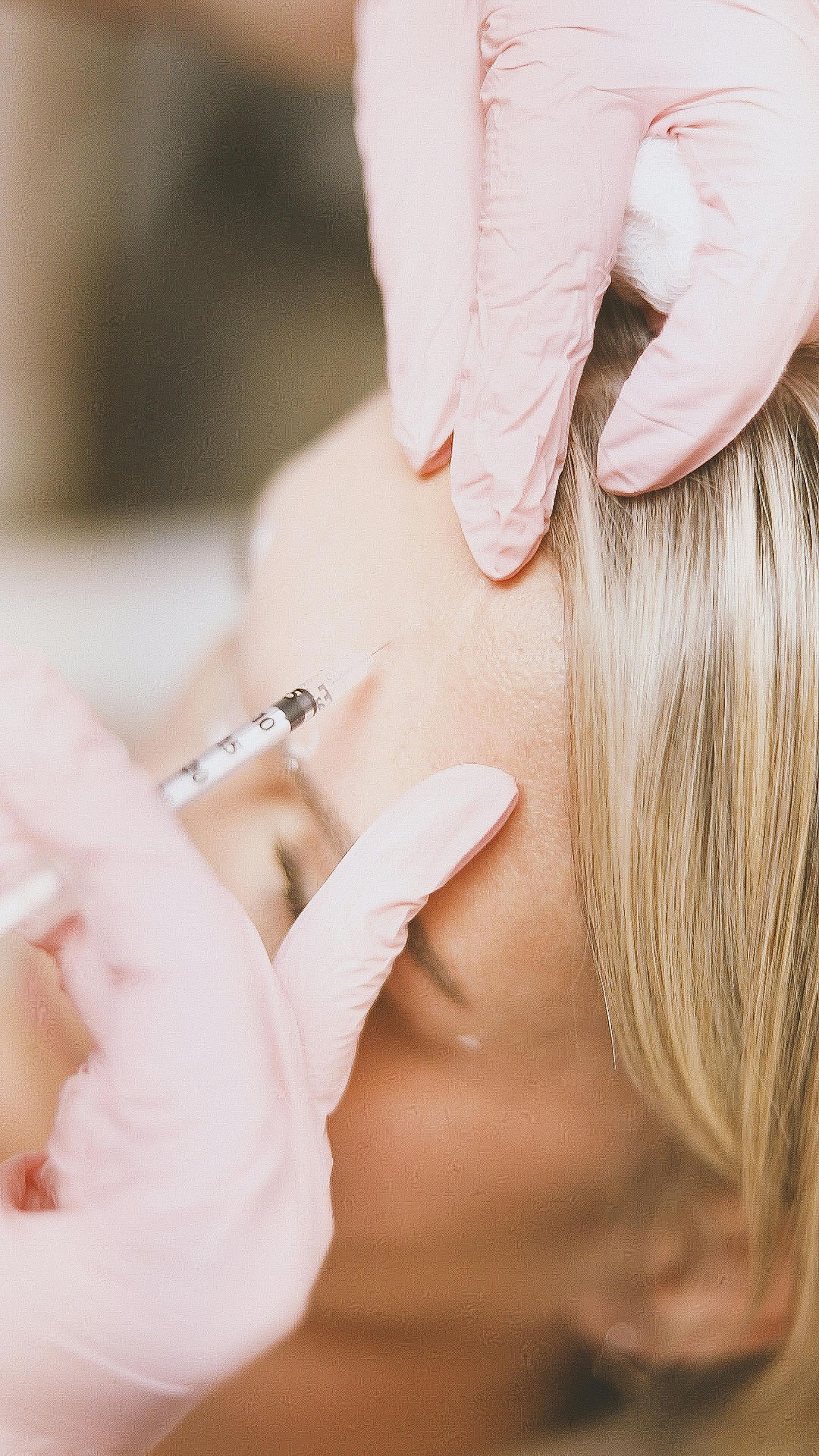
When we do move forward, exosomes are delivered either topically following a treatment that opens microchannels in the skin, or as an injectable series, depending on the plan we build with you. Sessions are typically spaced several weeks apart, because hair growth cycles are slow and meaningful change is assessed over months rather than weeks.
Photographs, taken from the start, in consistent lighting and at consistent angles. Hair changes slowly enough that memory is a poor measuring tool. A comparison between month zero and month six will tell you far more than how your hair happened to look this morning.
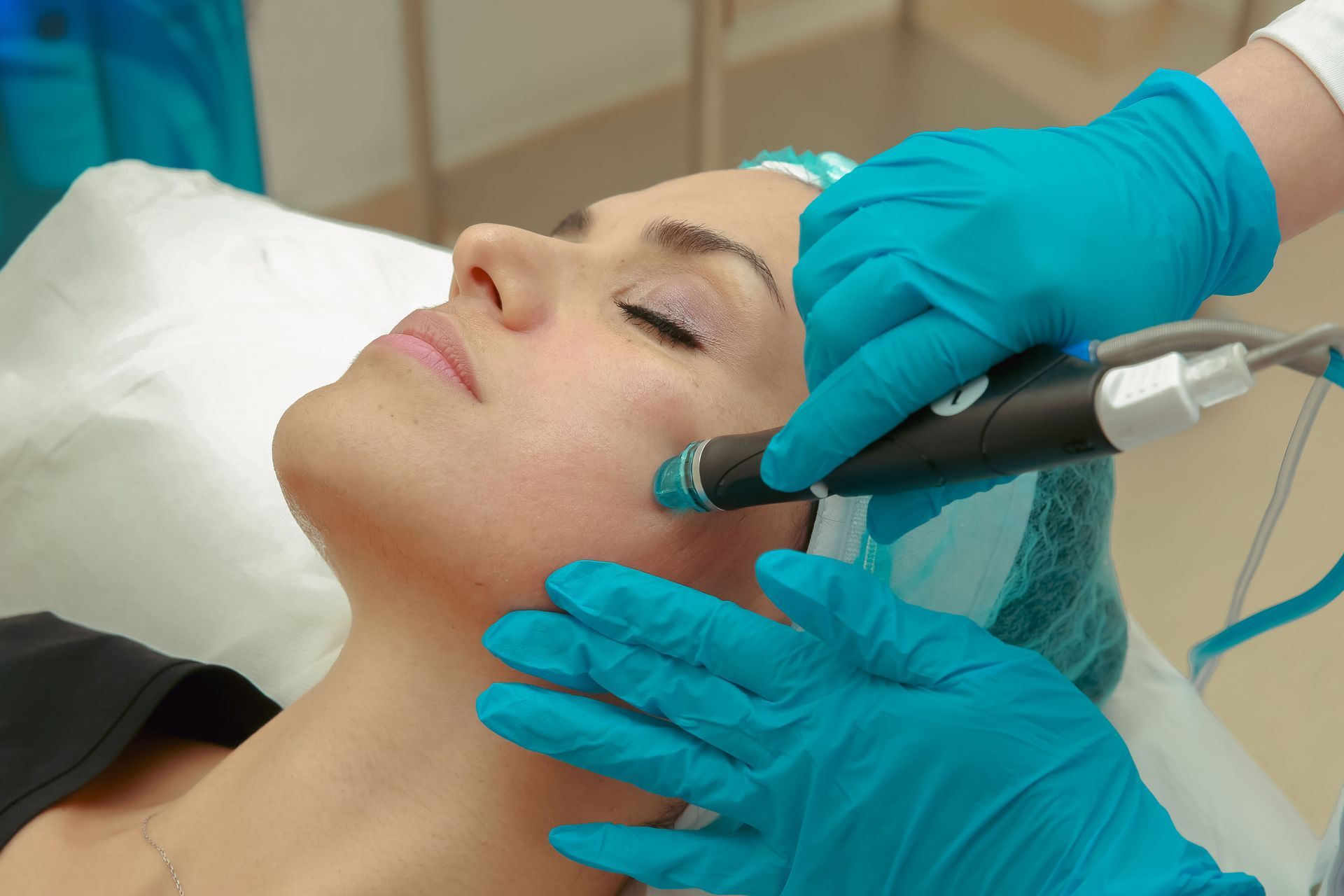
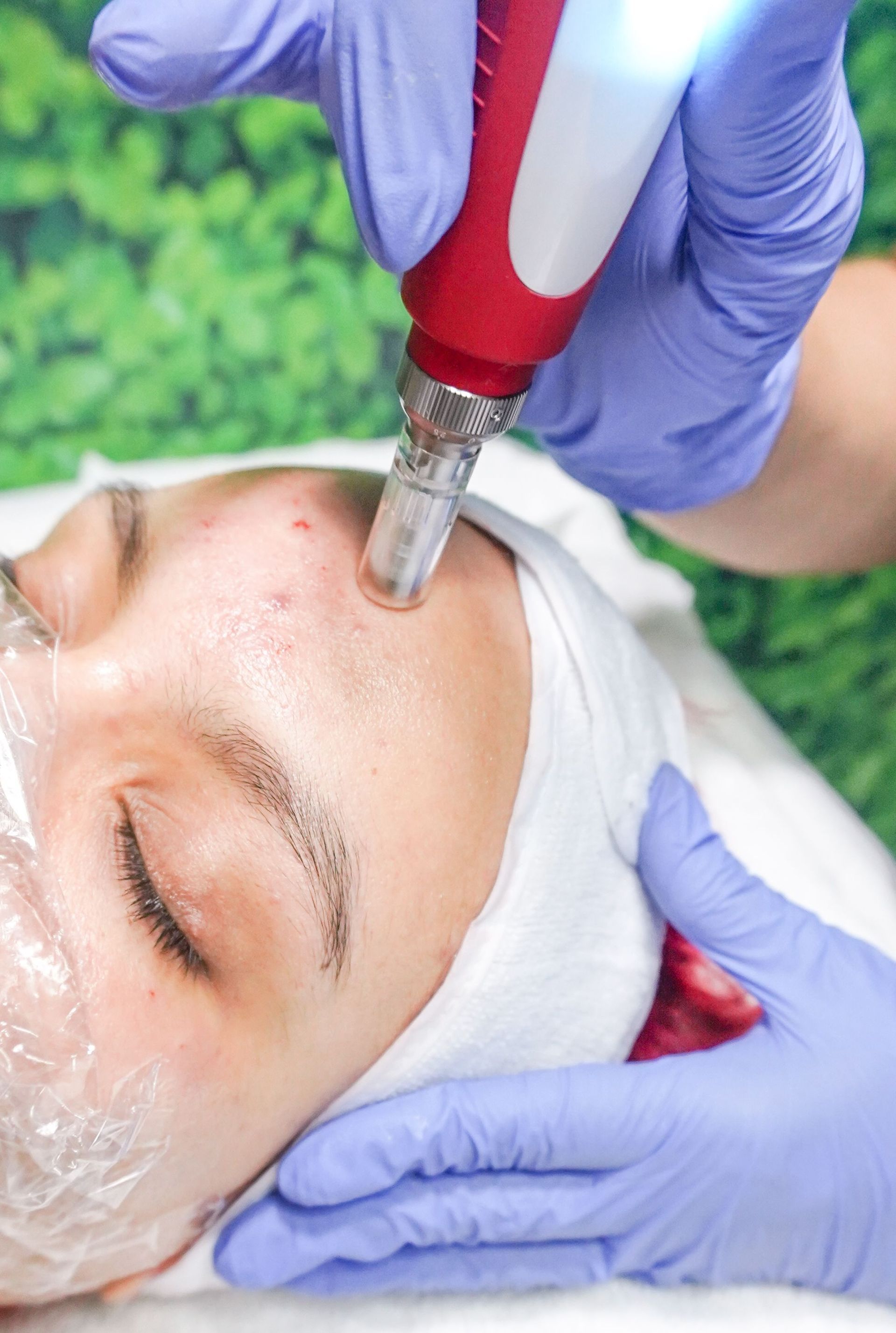
Exosomes are frequently used as a recovery enhancer rather than as a standalone service. Applied after treatments that create controlled micro-injury in the skin, such as microneedling and microchanneling, they may support a smoother recovery, less lingering redness and better overall skin quality.
The same reasoning applies on the scalp. Delivery matters, and pairing exosomes with a treatment that improves absorption is often part of a well-built plan.
Regenerative treatments are a genuine financial decision, and we do not think the numbers should stay a mystery until you are sitting in the chair. Current exosome pricing is published directly on our exosome treatment page so you can review it before you ever book.
For clients who would rather spread the cost out, we offer financing through Cherry and Affirm, including 0% APR options and no hard credit checks. The details are on our payment plans page.
Coastal living is harder on hair than most people give it credit for. Sun exposure across an unprotected part line, salt water, pool chlorine and near-constant humidity all accumulate, especially through a Myrtle Beach summer.
None of that causes pattern hair loss. It does affect the condition of the hair you currently have, which is worth protecting either way:
Healthy scalp skin gives any treatment a better environment to work in.
If your hair has been on your mind for a while, a conversation costs nothing. Book a free exosome consultation online, contact us, or call (843) 796-1769. We are at 4006 Postal Way Unit A in Carolina Forest, just off 501, serving Myrtle Beach, Conway, Surfside Beach and the wider Grand Strand. Bring your questions and your skepticism. Both are welcome here.
Hair grows slowly, so progress is usually assessed at three, six and twelve months rather than in weeks. Timelines and results vary from person to person.
Comfort depends on the delivery method. Topical application after a microchannel treatment feels quite different from an injectable series. We walk through exactly what to expect during your consultation.
No. PRP uses components drawn from your own blood. Exosome products are sourced separately and then applied or injected. Some clients ask about combining the two, which is a consultation conversation.
That depends on the type of thinning, the delivery method and your goals. We build a plan at your consultation rather than quoting a fixed number in advance.
Hair thinning is usually progressive, so most plans include some form of maintenance. Stopping treatment generally means returning to your underlying pattern over time.
Often yes, and many clients do combine approaches. Bring your full list to the consultation so we can coordinate with what you are already doing rather than duplicate it.



125 Co-Op Rd, Myrtle Beach, SC 29588
*Note! We have a new address starting October 1st!
Mon-Fri: 9am-7pm
Sat.: 9am-5pm
Phone: (843) 796 1769


Affordable Web Design for Myrtle Beach by Ayni Media LLC